Eco-Friendly Paper Packaging: Benefits, Types, Applications, and Global Market by Continent – ID 2
With increasing consumer, brand, and regulatory demand for reduced single-use plastics, eco-friendly packaging, particularly paper, has resurfaced as a sustainable packaging solution. In the global market, in this context paper packaging consists of corrugated cartons, folding cartons, molded pulp trays, paper bags, and coated paper applications. Research shows that managing and utilizing paper raw materials […]

With increasing consumer, brand, and regulatory demand for reduced single-use plastics, eco-friendly packaging, particularly paper, has resurfaced as a sustainable packaging solution. In the global market, in this context paper packaging consists of corrugated cartons, folding cartons, molded pulp trays, paper bags, and coated paper applications. Research shows that managing and utilizing paper raw materials offers a more positive impact than the large-scale use of single-use plastics. In other hand, while single-use plastics have advantages, concern in countries is growing over the unstoppable amount of plastic waste that is beginning to pollute life on earth. Furthermore, human population growth is also increasing waste production. Below, we discuss the environmental and business benefits, paper types, common applications, and global market size.
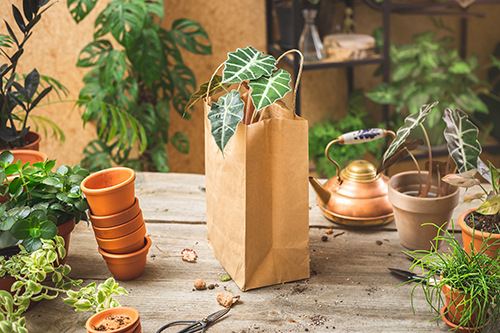
Why eco-friendly paper packaging? Key benefits
- Renewable Raw Material – Responsible forest management makes paper a renewable raw material that is good for the earth. This is an advantage compared to fossil-based plastics.
- Recyclability & Circularity – Due to its easily degradable and reformed naturally, paper and cardboard packaging are suitable for widespread recycling. Paper recycling systems in many countries are quite modern, making recycled paper a reusable material in daily applications.
- Biodegradability & Compostability – Uncoated paper can decompose naturally under ideal conditions and can even be composted in various systems. This is in stark contrast to conventional plastic, where even when it decomposes, microplastics remain.
- Lower Carbon Footprint (often) – Recycled papers have through efficient processing, resulting in fewer greenhouse gas emissions than plastic recycling process.
- Brand & Regulatory Alignment – Plastic-free labels are a new trend that is gaining market demand, especially as regulators restrict the use of single-use plastics. Paper is a practical solution to comply with regulations, as well as a powerful marketing tool.
- Design Flexibility – Paper is easier to print, emboss, shape, and even process with special treatments to increase strength and other benefits. Strong branding can easily be created with paper packaging.
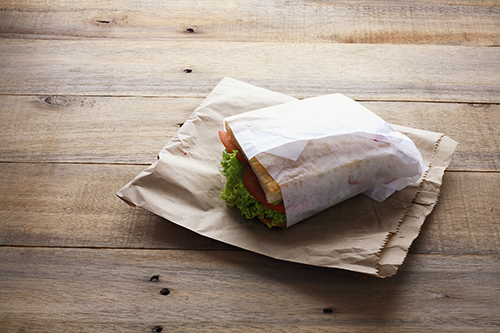
Main types of eco-friendly paper packaging
Paper products don’t stand alone, they’re not a single product, but rather a combination of paper formats and qualities. Below are the types of paper commonly circulated and used in the market.
Corrugated board (corrugated boxes)
- Forming structure : A corrugated paper core sandwiched between two layers of coated paper.
- Applications : Excellent for shipping and stacking.
- Sustainability : Made from previously recycled paper and can be recycled again.
- Market : Logistic & E-Commerce (online market)
Folding cartons (paperboard)
- Forming structure: Thick paper folded into a box.
- Applications: Cosmetic boxes, cereal boxes, lunch boxes, etc.
- Advantages: Detailed printing, marketing/brand image
- Sustainability: Recyclable
- Market: Retail (consumer goods)
Molded pulp (fiber trays, egg cartons)
- Forming structure : Molded from recycled paper
- Applications : Storage boxes, containers, inserts, etc.
- Sustainability : Reusing previously used paper pulp
- Market : Animal husbandry, electronics, food & beverage
Paper bags & sacks (kraft paper)
- Forming structure : Kraft paper (bleached or unbleached)
- Applications : Packing and carrying
- Market : Groceries, shopping bags, bakery packaging
- Advantages : Strong, competitive kraft paper
- Sustainability : Recyclable, biodegradable
Liquid cartons & barrier papers
- Forming structure : Multi-layered paper with a specific finish
- Applications : Packing and carrying
- Market : Groceries, shopping bags, bakery packaging, beverage industries
- Advantages : Paper Strong, competitive kraft paper
- Sustainability : More difficult to recycle due to the treatment process
Specialty papers (coated, grease-resistant, barrier)
- Forming structure : Paper with coating or lamination (water-based, wax, polymer barriers, etc.) for protection according to market requirements
- Applications : Lunch boxes, paper cups
- Market : Food & beverage
- Advantages : Liquid-resistant, oil-resistant, stronger
- Sustainability : Longer recycling process, difficult biodegradation
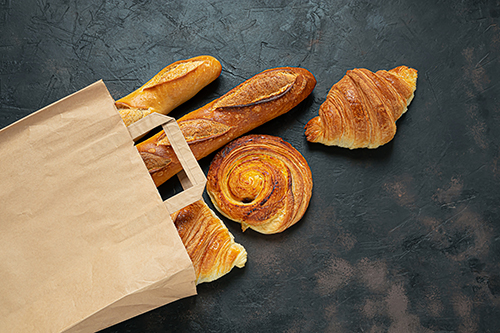
Applications — where paper packaging shines
Food & Beverage
Breathable paper is essential for maintaining the freshness of the food inside. It’s also oil- and water-resistant, helping to protect against oily or damp foods.
Applications: ready-to-eat food containers, bread bags, sandwich wrappers, lunch boxes, etc.
E-commerce & Retail
Protective packaging is essential for protecting products so they arrive safely in the hands of consumers. Whether for packaging consumer goods in-store or for online delivery, corrugated cardboard boxes are proven to be strong protectors, customizable folding cartons for brand exposure, and carry bags enhance the eco-friendly image in the market.
Consumer Packaged Goods (CPG)
A more premium appearance can be achieved with eye-catching customized printing, a more premium appearance, and production with lower MOQs compared to plastic packaging.
Applications: household products, cosmetics, personal care, pharmaceuticals, etc.
Industrial & Logistics
As a divider or partition in cartons, molded pulp protects heavy and fragile items. With its adaptable shape, molded pulp is an efficient paper product.
Applications: Electronic products, glassware, etc.
Agrictulture & Groceries
Fresh fruit and vegetable products can be packaged using molded pulp. Products can also be transported to consumers using paper bags and corrugated carton boxes.Applications: Fruits and vegetables, eggs, meat, etc.
Market size: global picture and continental snapshots (what the reports share)
Below the reputable researchers provide data :
| RESEARCH | MARKET SIZE | PROJECTS GROWTH | CAGR |
| Grand View Research | USD 397.52 Bil (2024) |
USD 527.12 Bil (in 2030) |
4.8% |
| Fortune Business Insights | USD 376.52 Bil |
| CONTINENT | SHARE | MARKET SIZE 2024 | DRIVER / TREND | REASON |
| Asia Pacific | 38.06% | USD 143.32 Bil | Rapid e-commerce growth, packaging demand from F&B and fast retail expansion | Booming e-commerce, rising disposable incomes, large manufacturing base, and strong packaging production capacity |
| North America | 23.2% | USD 92.2 Bil | Mature recycling systems, large e-commerce and retail sectors, and high per-capita packaging usage. | |
| Europe | 10% – 20% | USD 60-100 Bil | High consumer demand for recyclability | Europe is frequently cited as the second-largest market (after Asia Pacific) or close to it, driven by strict regulations (e.g., EU packaging waste rules) |
| Latin America | USD 1-9 Bil | Smaller than APAC/NA/EU but growing | Food & beverage, light industry | |
| Middle East & Africa | Market share is smaller, growth driven by urbanization and regulatory shifts | E-commerce, retail modernization |
Source : Grand View Research & Fortune Business Insights
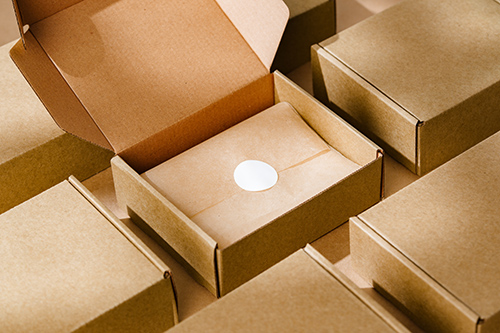
Drivers, opportunities and constraints
Drivers
Regulations on single-use plastics, as a form of corporate sustainability, demonstrate environmental concern.
E-commerce Expansion
Shipping in online businesses is a driving force behind the need for strong, safe, and environmentally friendly packaging.
Opportunities
Innovation in paper processing, which minimizes the use of plastic, ensures seamless recycling and biodegradation.
Constraints
Some paper types cannot yet replace plastic, such as those requiring strength and fluid resistance. Many manufacturers are competing to develop paper treatments capable of completely replacing plastic.
Cost
In some cases, cost is a constraint due to the lengthy development process. High costs can make products uncompetitive, and market acceptance is difficult.
Industry signals & examples
Large companies worldwide are campaigning for change by promoting the use of environmentally friendly packaging (usually made of paper) and reporting on the reduction of single-use plastics. This builds public trust in the sustainability programs committed by world-class companies.
Practical guidance for brands choosing eco-friendly paper packaging
- Match material to function — corrugated carton box for shipping / delivery, folding cartons for food & beverage and retail business, molded pulp for protective inserts, grease & resistant for kraft bakery.
- Prioritize recycled content when available; adjust to the target market and its application.
- Avoid non-recyclable laminates unless absolutely necessary; It is better to use a water-based coating or a single material that can be recycled more easily.
- Design for circularity — make reuse and recycling easy (clear labeling, minimal adhesives).
- Communicate responsibly — not campaigning excessively (greenwashing), but rather being more transparent in providing recycled information, fiber sources, and end-of-life expectations.